Article written for Contentworks Agency and published on Medium
Wall Street is usually associated with money, power and ambition, but beneath the towering offices and polished trading floors lies a darker history. For more than a century, New York’s financial district has been the setting for extraordinary events that seem almost too horrific to have really happened: deadly explosions, unexplained acts of violence, shattered buildings and lives destroyed by financial catastrophe. So, with Halloween approaching, we thought it was time to look beyond the charts and trading screens and explore some of Wall Street’s darker stories. They are real events, documented in the historical record, involving real people and, in some cases, crimes that remain disturbing decades later.
Is The Halloween Effect Fact Or Financial Folklore?
But before we get into the stories, there is another reason Halloween feels particularly appropriate for anyone interested in financial markets and that’s the Halloween Effect. The Halloween Effect is one of the more intriguing seasonal patterns in financial markets. It refers to the historical tendency for stock market returns to be stronger between November and April than they are between May and October, giving rise to the familiar Wall Street expression, “Sell in May and go away.”
There is genuine academic research behind the phenomenon. Studies examining international markets have found that returns have, historically, tended to be higher during the November-to-April period, although the strength of the effect varies considerably between countries and time periods.
That doesn’t mean Halloween itself possesses some mysterious influence over investors, of course. There is no evidence that pumpkins, ghouls or the changing of the clocks cause markets to rise. Researchers have proposed a variety of explanations, including seasonal changes in investor behaviour, trading activity, holidays, tax effects and patterns in risk-taking, but there is no single universally accepted explanation.
More importantly, the effect is not guaranteed to appear every year. Like many historical market patterns, it has weakened in some periods and remains the subject of debate among academics and investors. It is therefore probably best regarded as an interesting market anomaly rather than a supernatural trading strategy.
But while the Halloween Effect may be more folklore than fright, Wall Street itself has produced some stories that are genuinely terrifying.
The Wall Street Bombing Of 1920
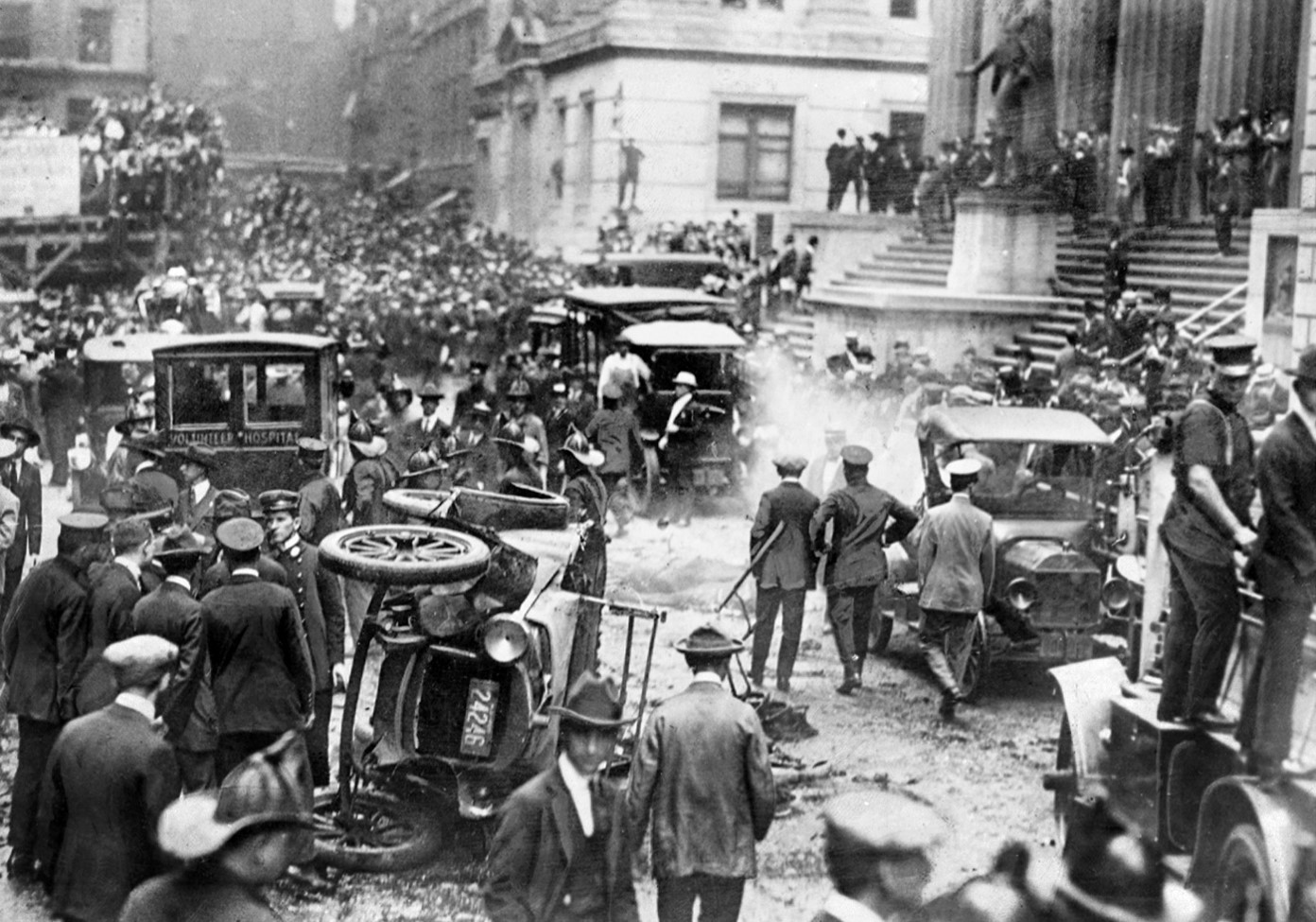
On the morning of 16 September 1920, the financial district was going about its business in much the same way it had on countless other September mornings. Wall Street was busy with workers, messengers, traders and clerks, while the imposing buildings of the financial district stood over the crowded streets. Among them was the headquarters of J.P. Morgan & Co., an institution that had come to symbolise American financial power. Directly outside, on Wall Street, a horse-drawn wagon quietly made its way through the traffic.
Nobody looking at it could have known what was inside. The wagon contained a bomb packed not only with explosives but with hundreds of pieces of metal designed to turn the blast into a devastating wave of shrapnel. At approximately lunchtime, the bomb detonated.
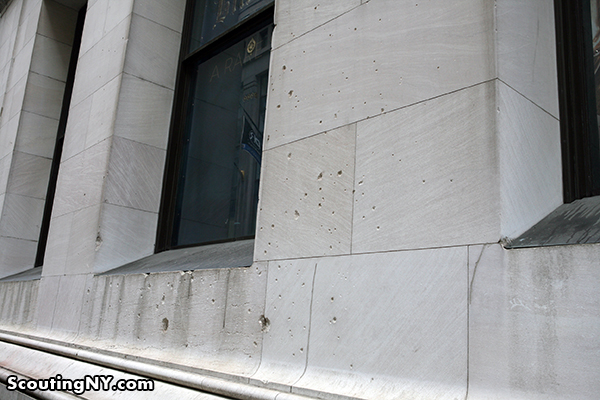
The explosion ripped through the financial district with terrifying force. Thirty-eight people were killed and hundreds more were injured, while buildings across the surrounding streets were damaged. The blast sent glass and metal flying through the crowded streets, and the façade of the Morgan building itself was scarred by fragments from the explosion.
The scale of the destruction was enormous, but what makes the story particularly unsettling is what happened or rather, what didn’t happen afterwards. Despite an extensive investigation, the person or people responsible were never conclusively identified. Investigators suspected anarchist groups operating in the United States at the time, particularly followers of the Italian anarchist Luigi Galleani, whose supporters had been connected with other bomb attacks. Investigators also discovered evidence suggesting that the bombing may have been preceded by a warning, although precisely who was responsible remained unresolved.
There was no dramatic courtroom conclusion and no definitive confession that closed the case. Instead, Wall Street eventually did what Wall Street has always done. It carried on.
The following day, the financial district began cleaning itself up. Broken glass was removed, damaged buildings were repaired and workers returned to their offices. The site of one of the deadliest terrorist attacks in New York’s history slowly became part of the city’s landscape. Today, the scars are still visible if you know where to look. The Morgan building retains marks from the shrapnel that tore through its exterior more than a century ago.
The Ghosts Of The 1929 Crash
Few events in financial history have generated as many dark stories as the Wall Street Crash of 1929.
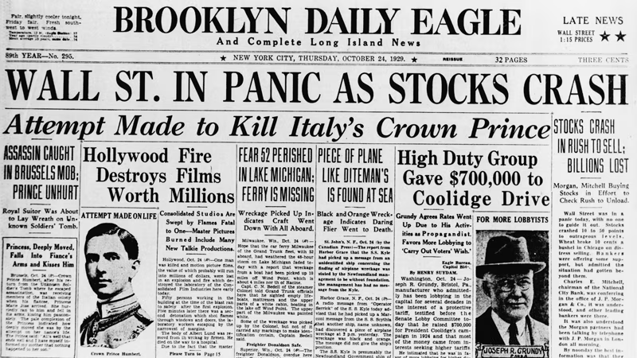
The image is now deeply embedded in popular culture. The market collapses, fortunes disappear overnight and ruined investors, overwhelmed by their losses, begin throwing themselves from skyscraper windows. It is an image so familiar that it has become almost inseparable from the crash itself but the uncomfortable truth is more complicated.
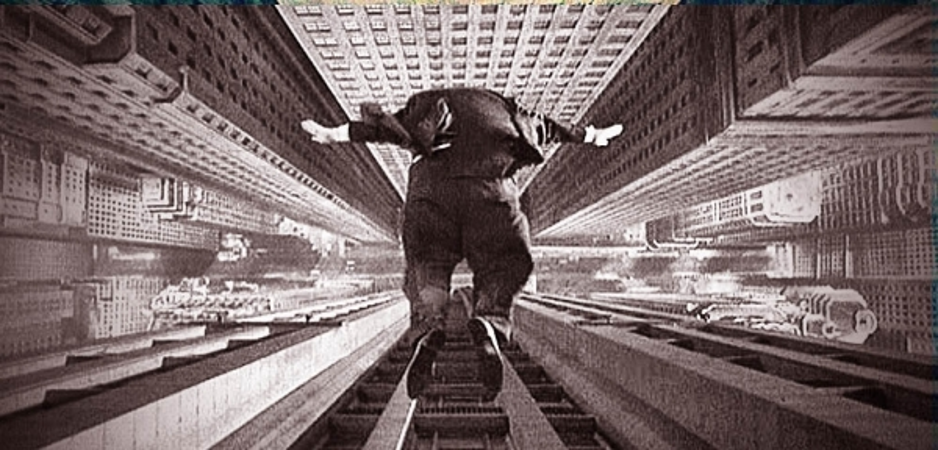
There were genuine suicides associated with the period, including people who died by jumping from buildings in the aftermath of the crash. But the idea that Wall Street was suddenly filled with bankers and brokers throwing themselves from windows was greatly exaggerated. Contemporary rumours and sensational reporting helped create a narrative that was considerably more dramatic than the historical evidence supports.
That doesn’t make the real stories any less tragic. On 7 November 1929, just weeks after the market’s dramatic collapse, a woman named Hulda Borowski, who had worked for many years as a clerk at a brokerage firm, jumped from the roof of New York’s Equitable Building. Nine days later, George Cutler, a businessman and member of the New York Mercantile Exchange who had suffered substantial losses, died after jumping from a seventh-floor ledge near Wall Street. These individual tragedies became tangled with the mythology surrounding the crash, creating one of the most enduring ghost stories in financial history.
Behind the collapsing share prices were families losing their savings, businesses failing, unemployment rising and people discovering that wealth that had seemed permanent could disappear with astonishing speed. The crash didn’t just destroy portfolios. It changed lives.
The Ghosts of Trinity Church
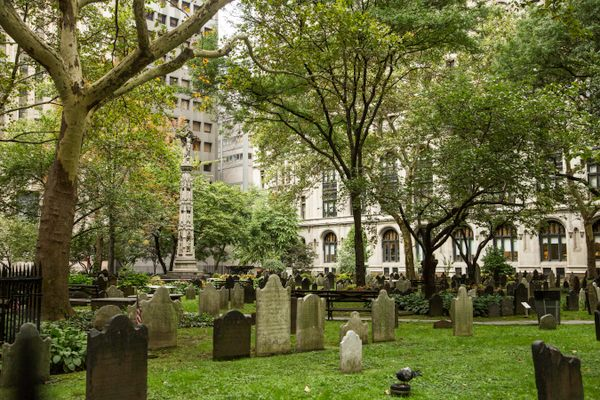
At the very heart of Wall Street, surrounded by some of the most powerful financial institutions in the world, there is a place where the noise of the market gives way to something much older. At the corner of Wall Street and Broadway stands Trinity Church, its Gothic spire rising above the financial district and its churchyard containing the graves of some of the most famous figures in American history, including Alexander Hamilton and his wife, Eliza. The churchyard dates back centuries, and beneath its weathered gravestones lie generations of New Yorkers who lived and died long before Wall Street became synonymous with global finance.
It is perhaps unsurprising that a place with so much history has acquired a few ghost stories of its own. Even Trinity Church acknowledges that stories of paranormal activity have become attached to the site, although the church is careful to describe them as legends rather than evidence of actual hauntings.
One of the darkest stories concerns George Stelz, a parish sexton and bell ringer who was murdered inside the church in August 1897.
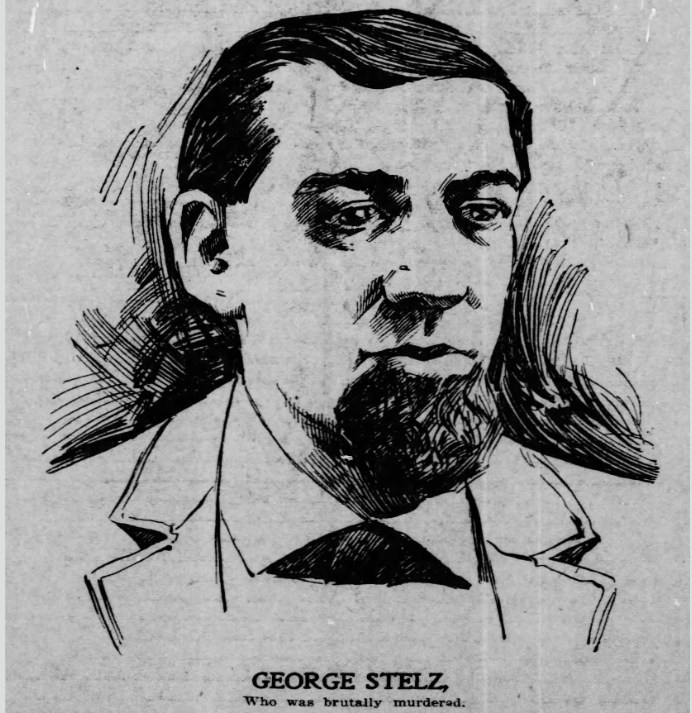
Stelz was found dead in the church vestibule, and although investigators had a prime suspect, nobody was ever convicted of his murder. According to the legend that developed afterwards, the blood of Stelz and even the bloody handprint of his killer remained visible on a stairway leading towards the bell tower. The story goes that Stelz’s spirit continued to wander the building, unable to rest while his murder remained unsolved.
There are other stories, too. People have claimed to hear footsteps moving through the building late at night, particularly around the stairs, even when nobody else should have been there. Others have described hearing voices or unexplained movement in parts of the church and its surrounding buildings. According to Trinity’s own account of the folklore, some people have even reported the unsettling sensation that they were not alone when they believed themselves to be the only person in the building.
Trinity Churchyard contains the graves of Alexander Hamilton, Robert Fulton and other figures whose names are woven into the history of New York and the United States. Over the years, ghost stories have attached themselves to several of these graves, with reports of shadowy figures, strange sounds and unexplained sensations appearing in paranormal accounts of the churchyard.
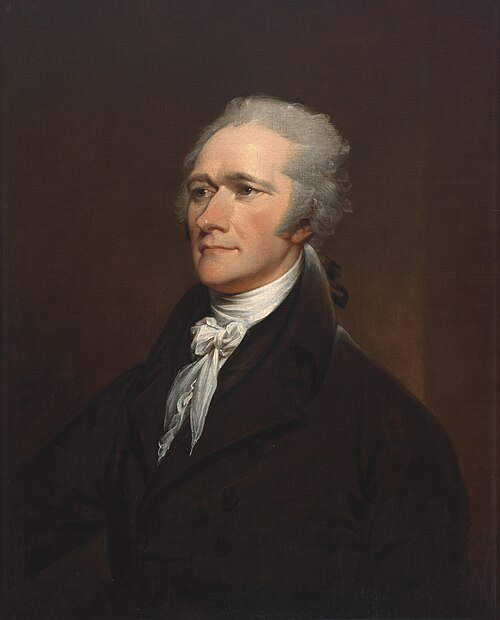
One particularly persistent piece of folklore involves Alexander Hamilton himself, whose death in his infamous 1804 duel with Aaron Burr has become one of America’s most famous political tragedies. Hamilton was buried at Trinity Churchyard, and the combination of his dramatic life, violent death and prominent grave has inevitably made him a natural character in New York’s ghost stories.
But perhaps the most intriguing part of Trinity’s haunted reputation is not centred around whether you believe in ghosts. Step through the gates of the churchyard and the atmosphere of Lower Manhattan changes almost immediately. The traffic and constant movement of the financial district continue beyond the walls, yet inside is a cemetery containing centuries of history. Gravestones stand in the shadow of skyscrapers, while some of America’s most consequential figures lie beneath the ground just metres from one of the world’s busiest financial centres. It creates an eerie contrast: the living world of Wall Street above, and generations of the dead beneath it.
The Real Horror Of Wall Street
Perhaps the reason these stories still fascinate us is that they reveal something about finance that can easily disappear behind today’s screens, charts and numbers.
Markets can feel abstract. A percentage point on an index doesn’t look particularly frightening on a computer screen. A billion-dollar loss is simply a number. But Wall Street’s history reminds us that behind those numbers are people, decisions and consequences.
The Halloween Effect is intriguing precisely because markets sometimes appear to follow patterns that we don’t completely understand. Yet the darker stories of Wall Street reveal the other side of that uncertainty. Markets are ultimately human institutions, and human beings are capable of extraordinary ambition, fear, greed, desperation and courage.
At Contentworks Agency we love all things finance, all things Wall Street and, of course, now all things Halloween. From market behaviour and trading trends to the strange, unexpected and sometimes genuinely frightening stories hidden within financial history, there is always something worth uncovering. Because sometimes, the scariest stories aren’t found in haunted houses. They’re found on Wall Street.